
ID003
WROOT
Urban agriculture via garage-to-greenhouse conversions

The Challenge
For more than a century, cities have been shaped around the private automobile, but times are changing. How might we repurpose car-centric infrastructure for more productive means?
The Opportunity
The car has radically informed our urban design. Because of car ownership, streets widened, neighbourhoods stretched, and homes quietly absorbed an architectural constant: the garage. Entire volumes of urban space are currently dedicated to storing vehicles that, for most of the day, sit idle. But this is the thing, infrastructures built for permanence rarely remain permanent.
As we’re tracking the evolution of mobility patterns and systems we’re left wondering how they might evolve with the rise of shared transportation, autonomous vehicles, and declining car ownership. With all of these changes on the horizon, the spatial logic of the garage is put into question.
Wroot begins with a simple observation: if private car ownership no longer defines urban living in the future, something else will.
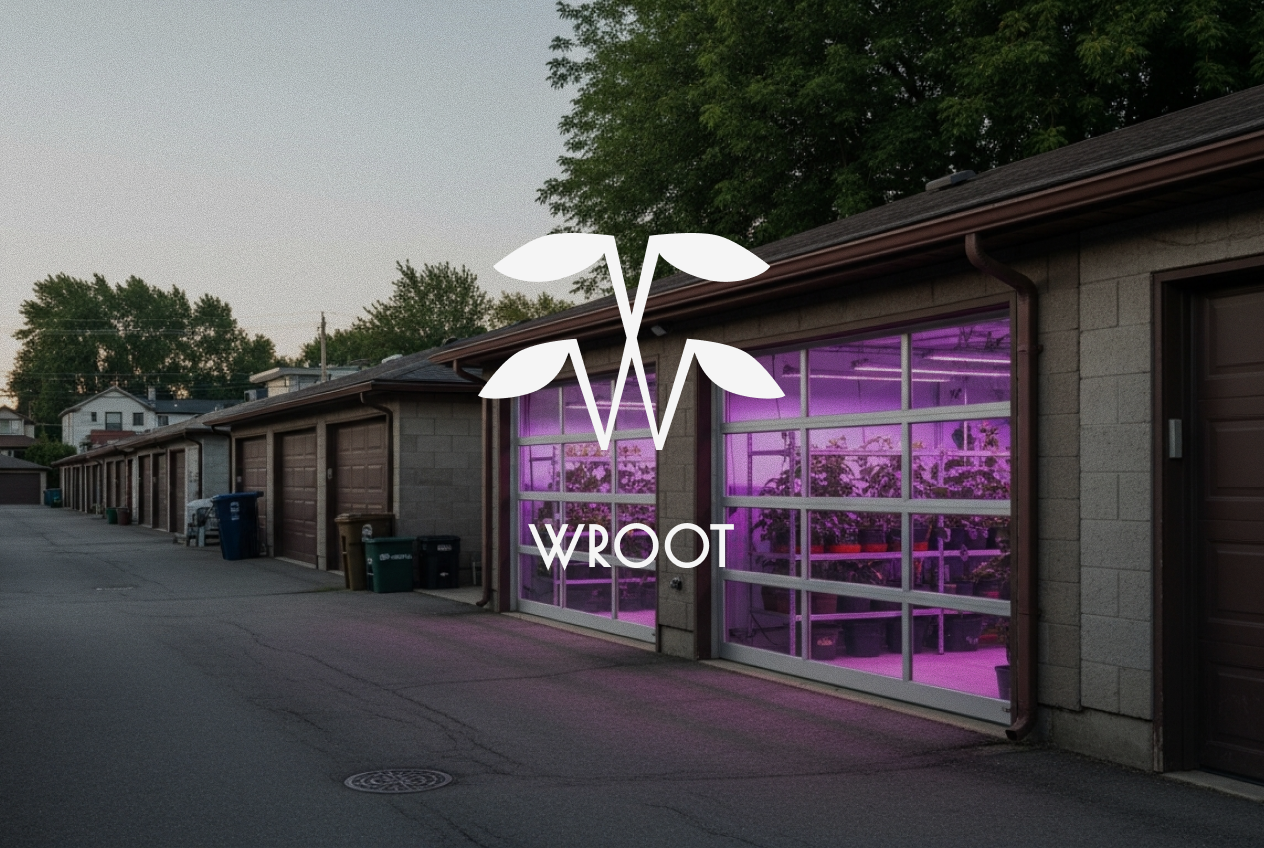
Wroot proposes a transformation of residential garages, parking bays, and enclosed vehicle spaces into compact, fully serviced growing environments.
With Wroot, everything you need to grow fresh local produce is installed in your garage. Lighting, climate controls, irrigation, and modular growing systems help shape stable, year-round growing conditions. Because Wroot manages planting cycles, crop monitoring, harvesting, and system maintenance, customers don’t have to know how to be garderners or farmers to participate in an urban agricultural revolution.

For residents, participation requires little more than an unused space. In return, households receive a share of the produce grown within their converted garages or can opt for financial compensation. Through the Wroot app, participants can observe what is growing in their space, track growth cycles, and anticipate harvesting or servicing schedules.

Beyond garages, Wroot also converts and manages front lawns into managed growing spaces. To aid with food resiliency, underutilized lawns are transformed with the help of growing boxes, crops, and agricultural produce. As with the garage spaces, the front lawn growing areas are managed and harvested by Wroot.
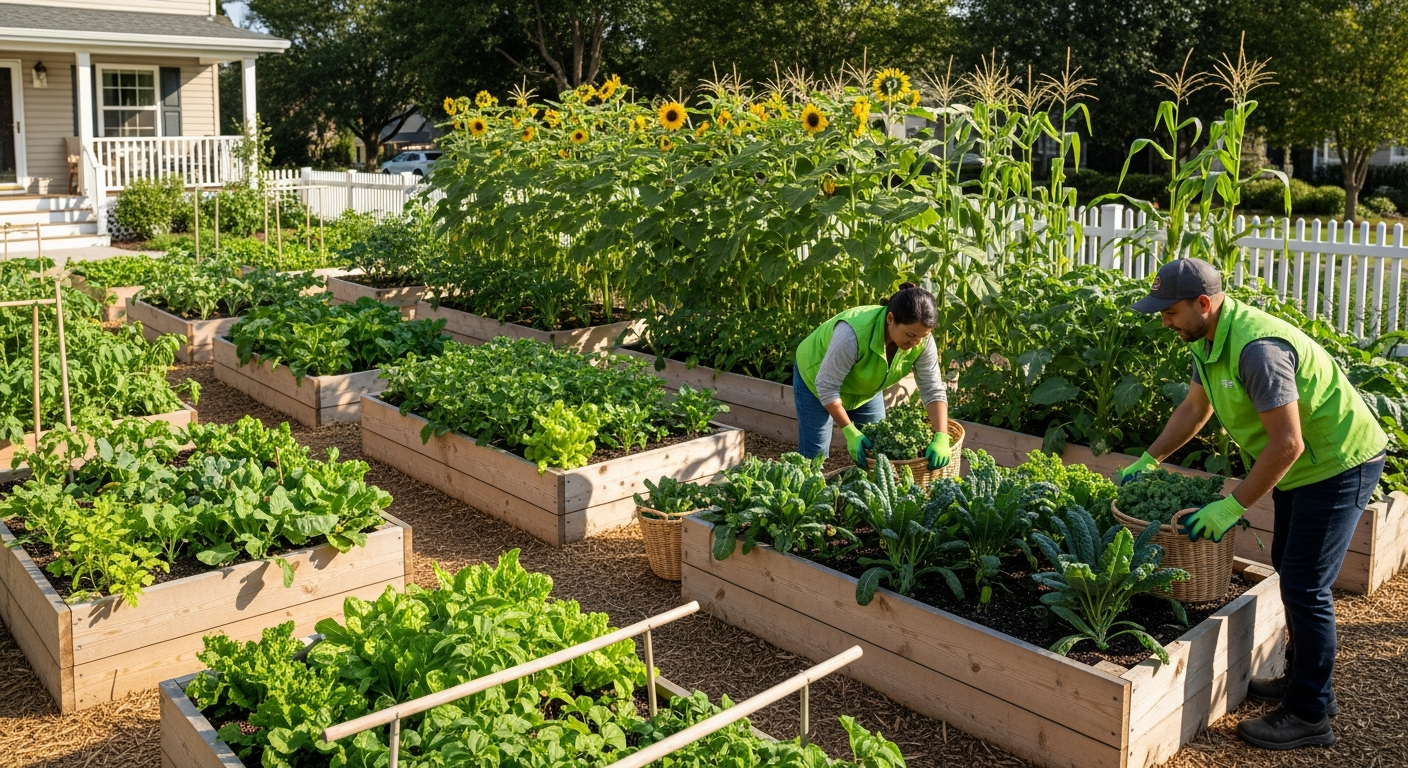
The shift Wroot proposes is not merely spatial but also cultural. Food production, historically relegated to rural zones, can re-enter everyday urban life without demanding that residents become farmers.
In this reframing, the garage ceases to be an underutilized relic of car-dependent design and instead becomes a productive unit for urban food resilience.